Real Cost

Understand how creating St. George would reshape public schools, taxes, and opportunity across our parish.

A photographic image of a large wooden conference table in a civic meeting room, covered with neatly organized printed maps, budget spreadsheets, and color-coded folders labeled with neutral terms like “Facilities,” “Transportation,” and “Tax Impact.” A digital tablet on the table displays a detailed bar chart comparing school funding scenarios. Daylight from tall windows to the side casts soft, natural light across the papers, creating gentle shadows and legible highlights. The composition is shot from a slightly elevated angle, with sharp focus on the documents and a subtle bokeh effect on the far edge of the table. The mood is professional, data-driven, and focused on thoughtful policy analysis.
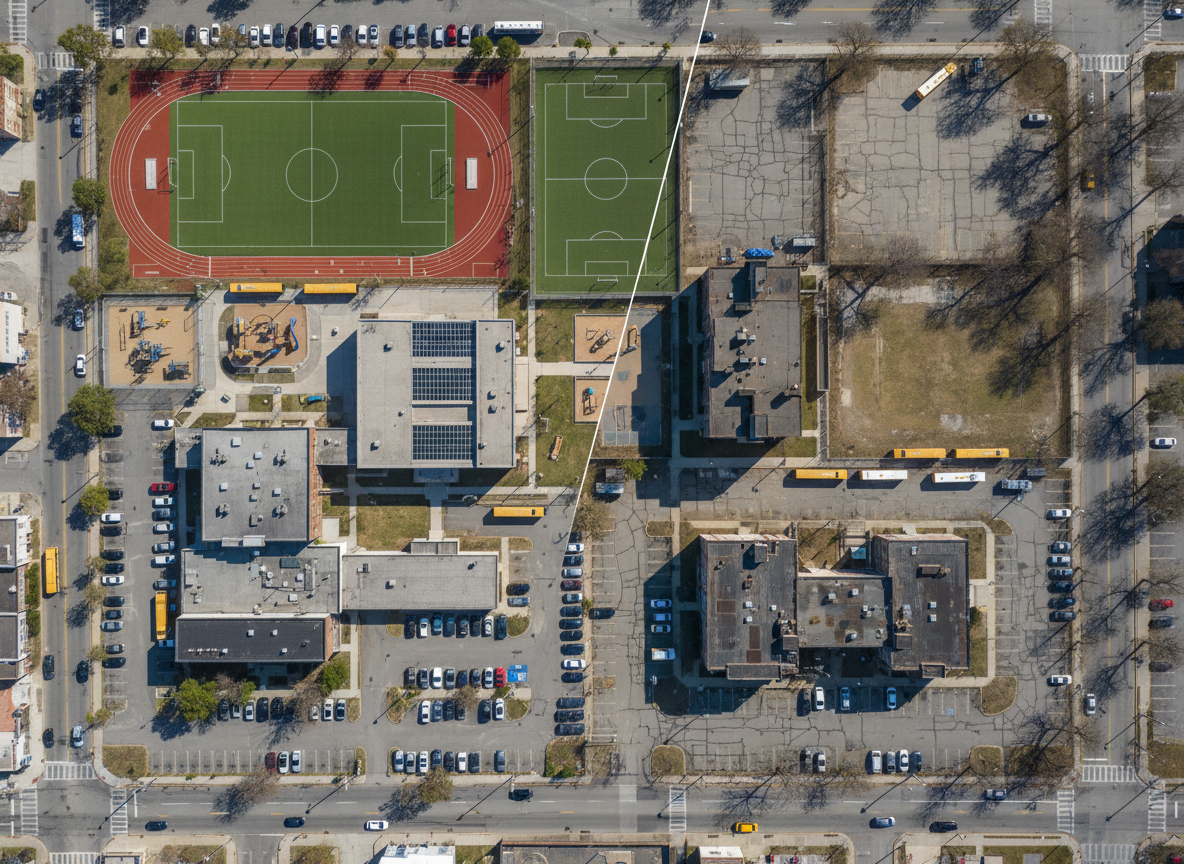
A detailed aerial photographic view of a mid-sized American city divided by an invisible line, with one side showing well-maintained brick school buildings with modern athletic fields and the other side showing older, worn school structures with cracked asphalt lots. The scene is captured at midday under bright but slightly diffused sunlight, revealing subtle differences in roof conditions, greenery, and resources. Street grids, buses, and parked cars are visible but distant, rendered in sharp focus with a professional, documentary realism. The composition uses a wide-angle lens and centered framing, emphasizing contrast in infrastructure while maintaining a neutral, objective atmosphere suitable for an education equity analysis site.

Why St. George Matters

We analyze the proposed City of St. George and school district, revealing hidden costs for Black, Brown, and low‑income students, and providing clear, sourced information so families, educators, and taxpayers can advocate for truly equitable public education.

Our Coalition
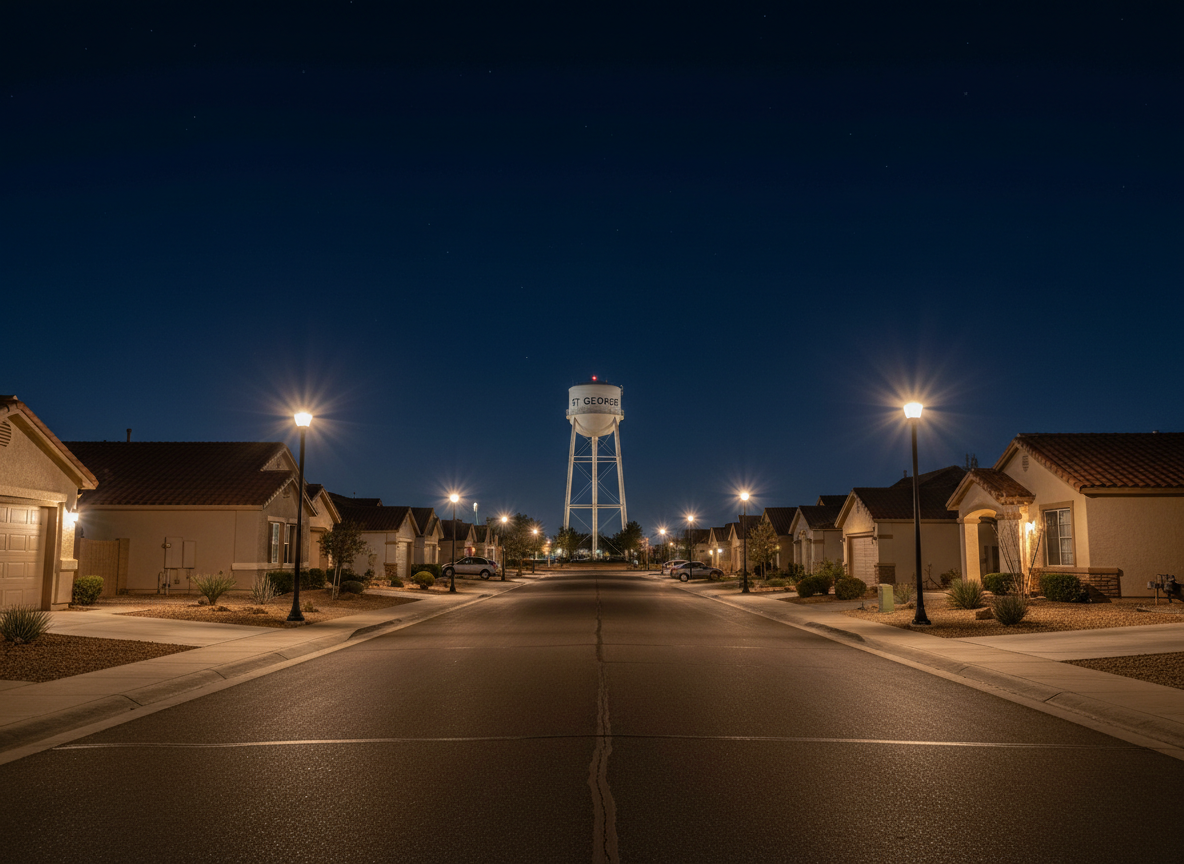
A nighttime photographic scene of a quiet residential street in St. George, with a clear view of modest single-family homes, streetlights, and a distant water tower labeled “St. George” in clean, neutral typography. The streetlights cast warm pools of light on the pavement while the sky holds a deep navy tone. The camera is positioned at a low angle near the curb, using a wide lens to capture both foreground and background with crisp clarity. The atmosphere feels calm and contemplative, suggesting community stakes and long-term consequences of policy decisions, while maintaining a professional, non-sensational visual style suitable for nonprofit educational content.

Aarav Sharma

CEO

Public school parent and data analyst exposing how St. George worsens racial funding gaps.
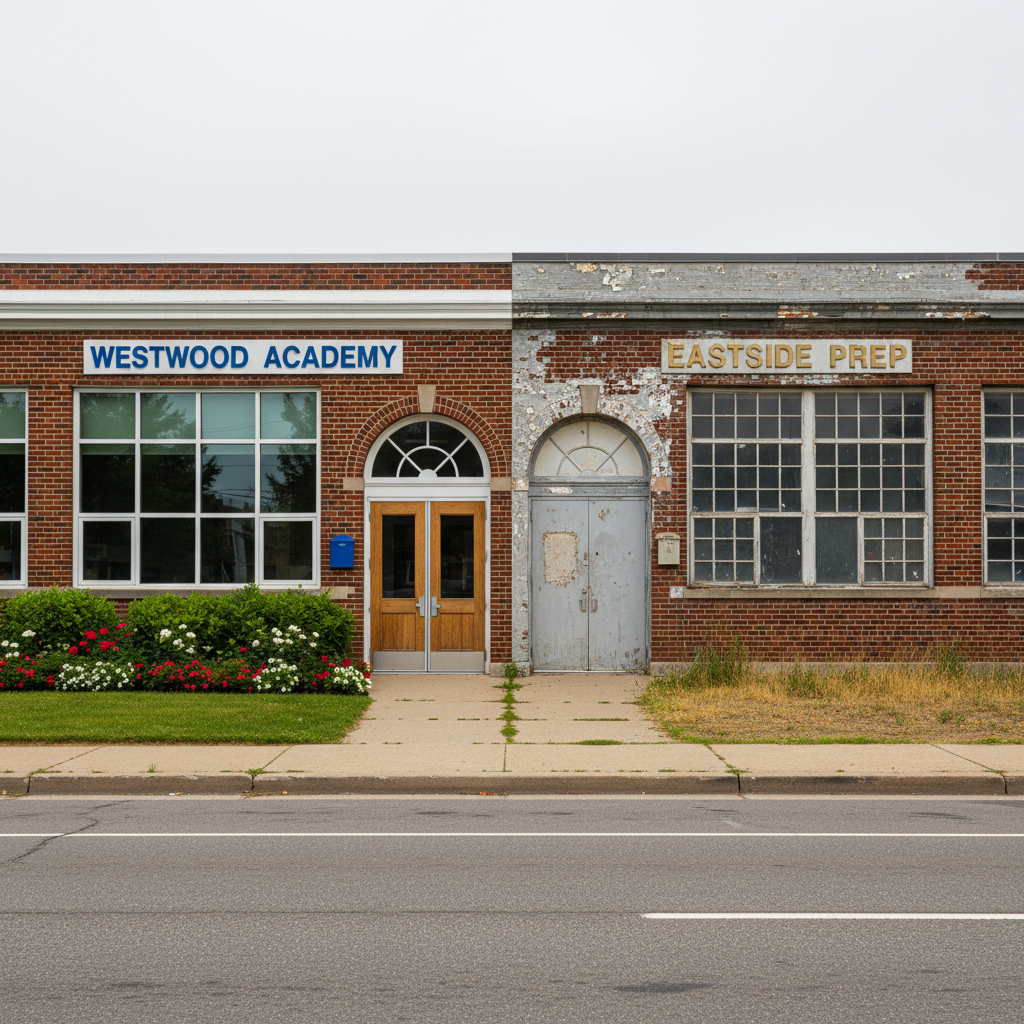
A close-up photographic shot of two adjacent school building facades, one with freshly painted signage, clean windows, and vibrant landscaping, the other with faded lettering, peeling paint, and patchy grass. The camera is positioned at eye level across a quiet street, capturing the full width of each entrance in balanced framing. Soft overcast daylight creates even, neutral lighting that avoids dramatic shadows, highlighting surface textures and material conditions. The mood is analytical and observant rather than emotional, with a clean, modern documentary style that visually conveys disparities in public investment and the real cost of maintaining separate school systems.

Mateo García

CTO

Civil rights attorney advising on desegregation law, tax impacts, and students’ constitutional protections.

A meticulous photographic still life of an open notebook on a smooth wood desk, with neatly handwritten notes about school funding, a printed infographic titled “The Real Cost of Separation,” and a calculator resting beside a slim laptop displaying a simple line graph. A neutral-colored mug and a small stack of policy reports sit nearby. Soft morning light from a nearby window illuminates the scene, creating gentle shadows and subtle reflections on the laptop screen. Shot from an overhead angle with a clean, minimalist composition and sharp focus, the image conveys careful research, transparency, and a professional approach to understanding the real costs behind education policy decisions.

Zuri Ndlovu

Engineer

Former educator documenting classroom realities and budget cuts behind polished promises of a new district.

A photographic image of a large wooden conference table in a civic meeting room, covered with neatly organized printed maps, budget spreadsheets, and color-coded folders labeled with neutral terms like “Facilities,” “Transportation,” and “Tax Impact.” A digital tablet on the table displays a detailed bar chart comparing school funding scenarios. Daylight from tall windows to the side casts soft, natural light across the papers, creating gentle shadows and legible highlights. The composition is shot from a slightly elevated angle, with sharp focus on the documents and a subtle bokeh effect on the far edge of the table. The mood is professional, data-driven, and focused on thoughtful policy analysis.

Leila Haddad

Designer

Community organizer coordinating volunteers, neighborhood forums, and multilingual outreach to families most affected.

A detailed aerial photographic view of a mid-sized American city divided by an invisible line, with one side showing well-maintained brick school buildings with modern athletic fields and the other side showing older, worn school structures with cracked asphalt lots. The scene is captured at midday under bright but slightly diffused sunlight, revealing subtle differences in roof conditions, greenery, and resources. Street grids, buses, and parked cars are visible but distant, rendered in sharp focus with a professional, documentary realism. The composition uses a wide-angle lens and centered framing, emphasizing contrast in infrastructure while maintaining a neutral, objective atmosphere suitable for an education equity analysis site.
A nighttime photographic scene of a quiet residential street in St. George, with a clear view of modest single-family homes, streetlights, and a distant water tower labeled “St. George” in clean, neutral typography. The streetlights cast warm pools of light on the pavement while the sky holds a deep navy tone. The camera is positioned at a low angle near the curb, using a wide lens to capture both foreground and background with crisp clarity. The atmosphere feels calm and contemplative, suggesting community stakes and long-term consequences of policy decisions, while maintaining a professional, non-sensational visual style suitable for nonprofit educational content.
A close-up photographic shot of two adjacent school building facades, one with freshly painted signage, clean windows, and vibrant landscaping, the other with faded lettering, peeling paint, and patchy grass. The camera is positioned at eye level across a quiet street, capturing the full width of each entrance in balanced framing. Soft overcast daylight creates even, neutral lighting that avoids dramatic shadows, highlighting surface textures and material conditions. The mood is analytical and observant rather than emotional, with a clean, modern documentary style that visually conveys disparities in public investment and the real cost of maintaining separate school systems.